One scan.
Followed through.

We queue one scan and follow PHP through Dispatch, from the first finding to a verified, stamped close.
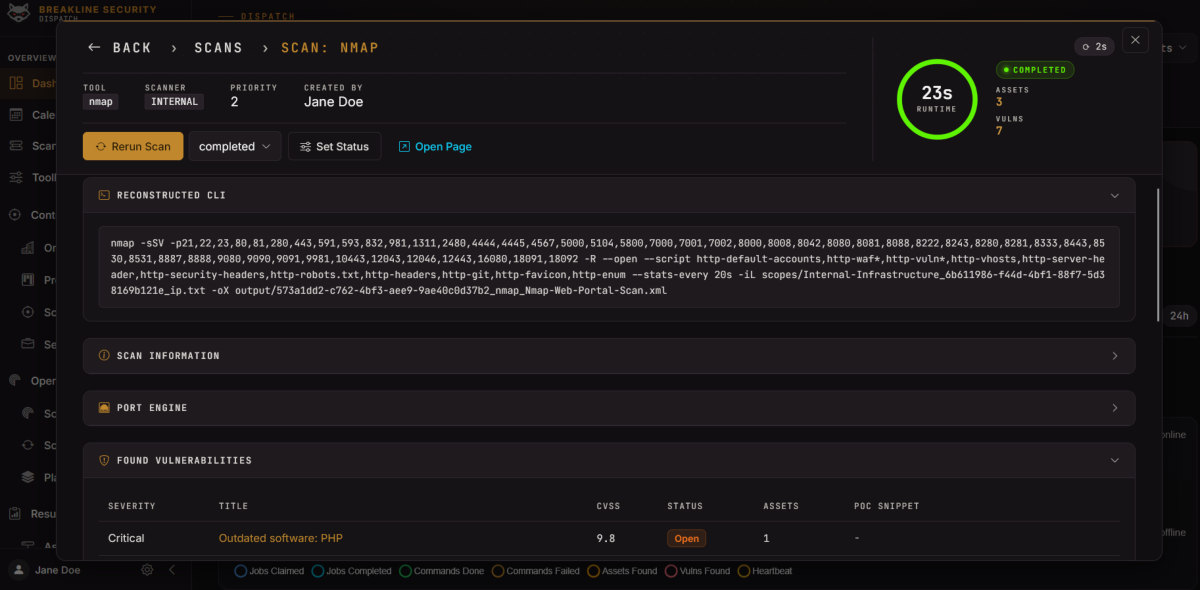
Findings detected from tool output and software versions
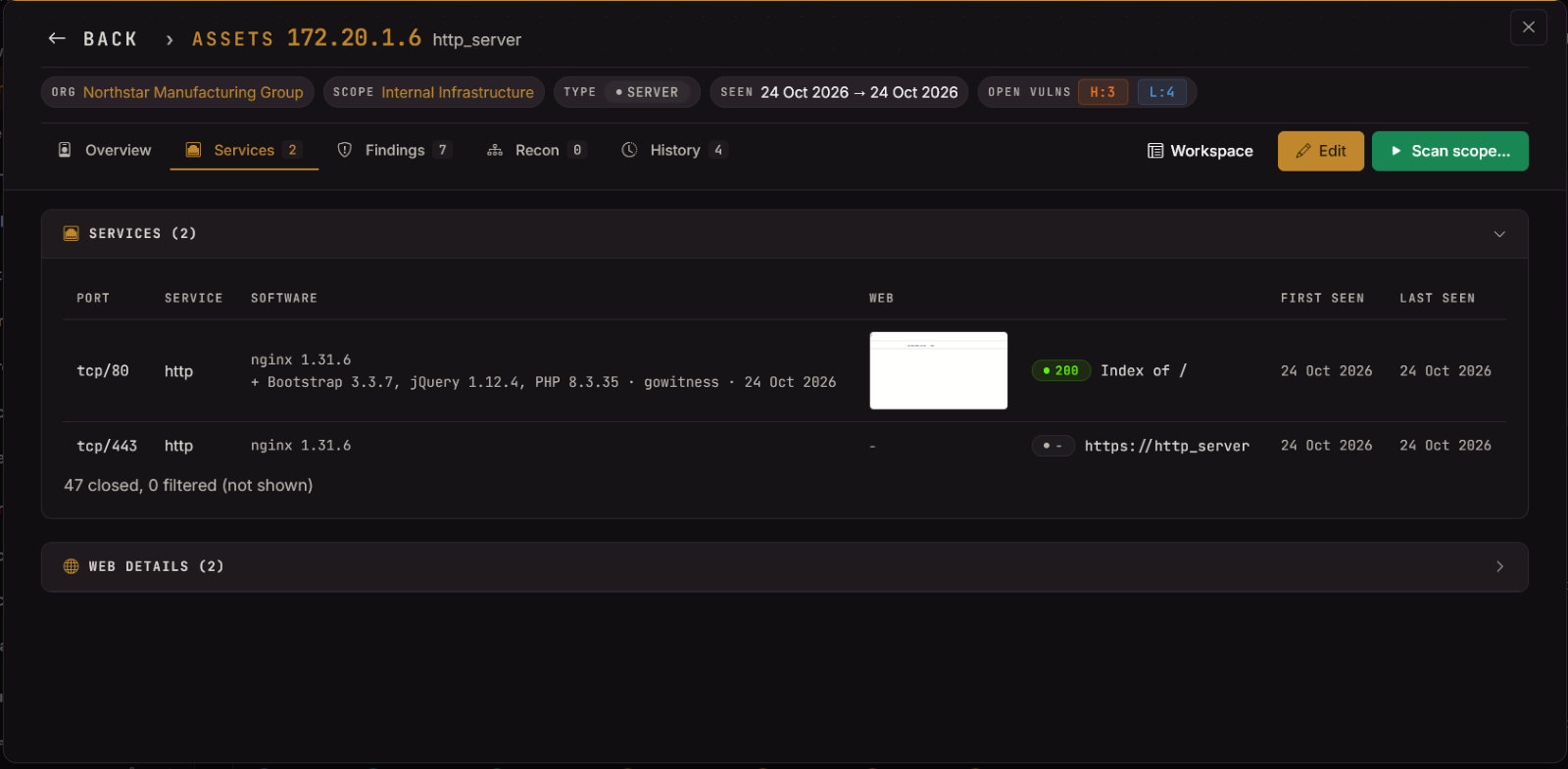
Assets discovered and catalogued: tech, services, screenshots and metadata
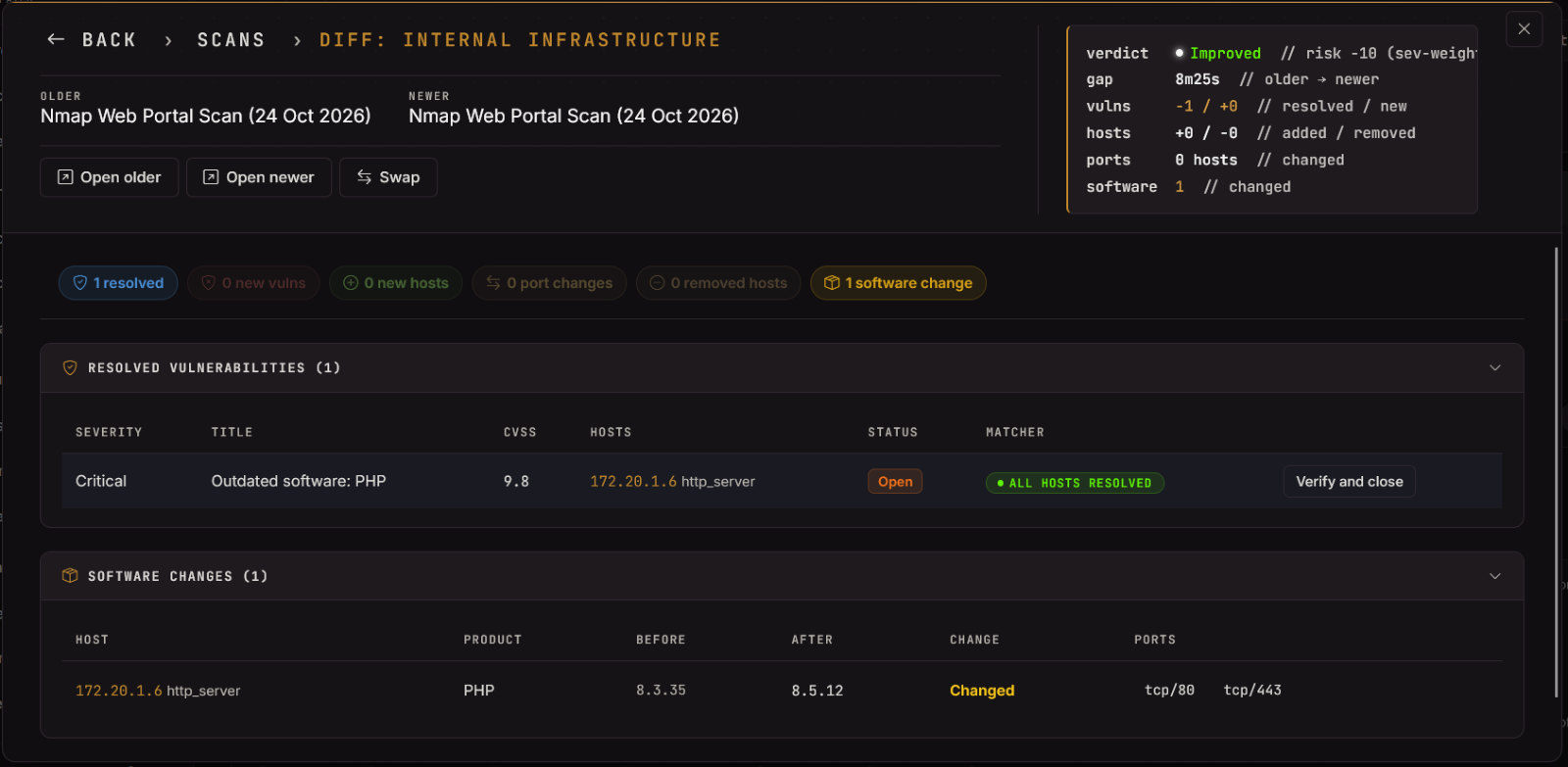
The scan diff puts what changed up front: all hosts resolved, PHP 8.3.35 to 8.5.12
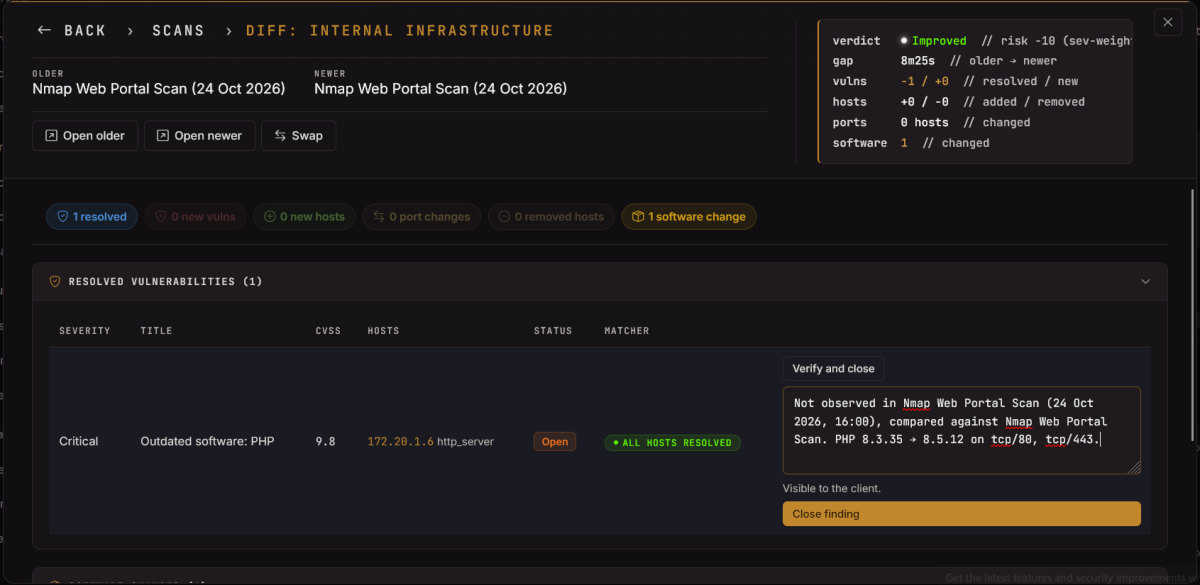
Lifecycle at a glance; the evidence writes the close-out note
Completed Nmap scan in Dispatch with the reconstructed command line, scan information, port engine and a Critical finding, Outdated software: PHP, CVSS 9.8, raised from the version string.
01Findings raised from the tool output and software versions
Asset record for 172.20.1.6: nginx 1.31.6, Bootstrap 3.3.7, jQuery 1.12.4 and PHP 8.3.35 with the tool that saw each, first and last seen, and a gowitness screenshot.
02Assets catalogued: tech, services, screenshots and metadata
Scan diff between two Nmap Web Portal scans: verdict improved, one vulnerability resolved, software change PHP 8.3.35 to 8.5.12 on 172.20.1.6.
03The diff puts what changed up front: all hosts resolved, PHP 8.3.35 to 8.5.12
Verify and close on the resolved PHP finding: the note reads Not observed in Nmap Web Portal Scan, compared against the earlier scan, PHP 8.3.35 to 8.5.12 on tcp/80 and tcp/443.
04Verified on rescan; the evidence writes the close-out note

For MSPs and consultancies

Every client engagement leaves you with an up-to-date asset and software picture, not an admin timesink. When the next CVE lands, you can tell each client within minutes whether they're exposed, then rerun the same scan to prove the fix.

For internal teams

Your estate's software inventory builds itself from the scans you already run, with the tool and date behind every version. Patch, rescan, and close the finding on evidence, not assumption.